Advanced Treatment for Complex Coronary Disease
Some coronary artery blockages are more challenging because of their location, calcification, vessel anatomy or involvement of arterial branches. These cases may require advanced interventional techniques beyond conventional coronary angioplasty.
Dr. Rohan Ainchwar’s services include Left Main Angioplasty, Bifurcation Angioplasty, Rotablation and Intravascular Lithotripsy (IVL).
Left Main Angioplasty
The left main coronary artery supplies blood to a significant portion of the heart. Disease affecting this artery requires detailed assessment and careful treatment planning.
In appropriately selected patients, angioplasty may be considered according to coronary anatomy and overall clinical condition.
Bifurcation Angioplasty
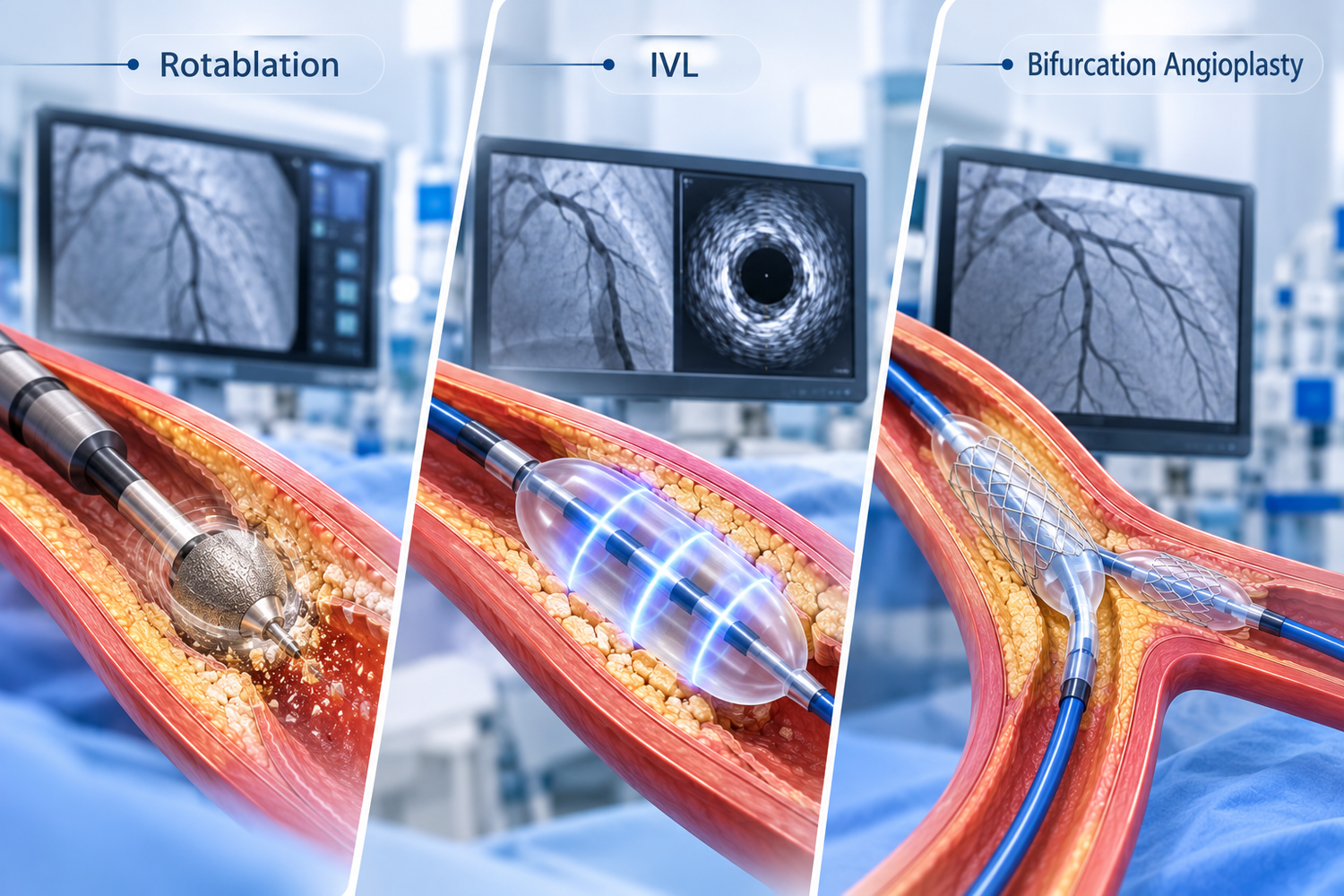
A bifurcation lesion occurs where a coronary artery divides into two branches.
Treatment can be more complex because both the main vessel and side branch need to be considered during intervention. Specialized angioplasty strategies may therefore be required.
Rotablation
Severe calcium deposits can make a coronary narrowing difficult to treat using conventional balloon techniques.
Rotablation is a specialized technique that may be used in selected heavily calcified coronary lesions to modify the calcified area and facilitate subsequent treatment.
Intravascular Lithotripsy – IVL
IVL is another technology used in selected calcified coronary lesions. It is designed to modify calcium within the artery, helping prepare the vessel for further coronary intervention.
Individualized Procedural Planning
Complex coronary intervention may incorporate:
- Advanced coronary angiography
- IVUS guidance
- Physiological assessment with FFR or iFR
- Specialized lesion preparation
- Appropriate angioplasty and stenting strategies
The technique selected depends on the coronary anatomy, characteristics of the blockage, degree of calcification and patient’s overall cardiac condition.