Evaluation and Management of Deep Vein Thrombosis
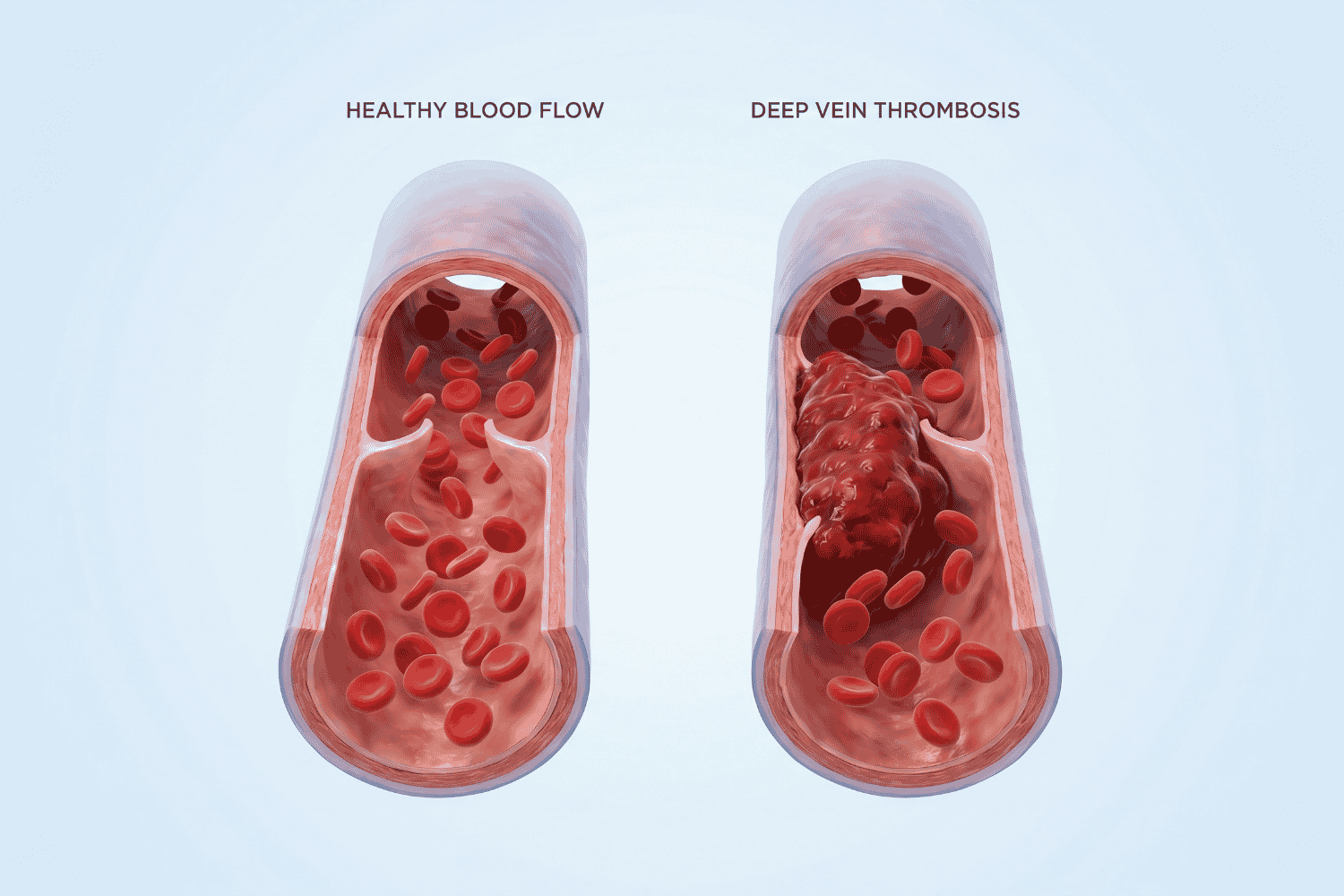
Deep Vein Thrombosis (DVT) occurs when a blood clot develops within a deep vein, commonly in the lower limb.
DVT requires appropriate medical assessment because the location, extent and clinical significance of the clot can vary between patients. Dr. Rohan Ainchwar provides evaluation and management of DVT as part of his cardiovascular services.
Understanding DVT
Blood normally flows continuously through the veins toward the heart. When a clot forms within a deep vein, it can partially or completely obstruct normal venous blood flow.
Patients may experience symptoms involving the affected limb, although symptoms can vary.
Possible Symptoms
Symptoms that may require medical evaluation include:
- Swelling in one limb
- Pain or discomfort
- Tenderness
- A feeling of heaviness
- Changes involving the affected area
These symptoms can occur for several reasons and do not confirm DVT by themselves. Appropriate clinical evaluation is therefore important.
Assessment and Treatment Planning
Management depends on the individual patient and may take into account:
- Location of the clot
- Extent of thrombosis
- Severity of symptoms
- Medical history
- Associated cardiovascular conditions
- Risk of complications
- Previous episodes of thrombosis
Treatment is planned according to the clinical findings and investigation results.
Continued Monitoring
Follow-up may be required to assess the patient’s progress, treatment response and overall vascular health.
Patients may also receive guidance regarding relevant risk factors and measures appropriate to their individual medical condition.
Early medical evaluation is particularly important when symptoms suggest a possible vascular problem. Dr. Ainchwar’s cardiovascular practice allows DVT to be assessed within the broader context of the patient’s vascular and cardiac health.